Application to purchase questions

Arc welding equipment by shop duty

Use this page to turn a shop duty into arc welding equipment questions. Welding Equipment Sourcing is an independent sourcing partner. The matrix below does not assign a process, a stock unit, or a certificate to your bay.

Write thickness in mm, position, and whether the work is indoor. A 10-minute duty-cycle test at 40 °C can reject a machine that looked adequate from a headline ampere number alone. Input voltage still has to match the panel: 208 V, 230 V, or 460 V, with Hz and phase written out.
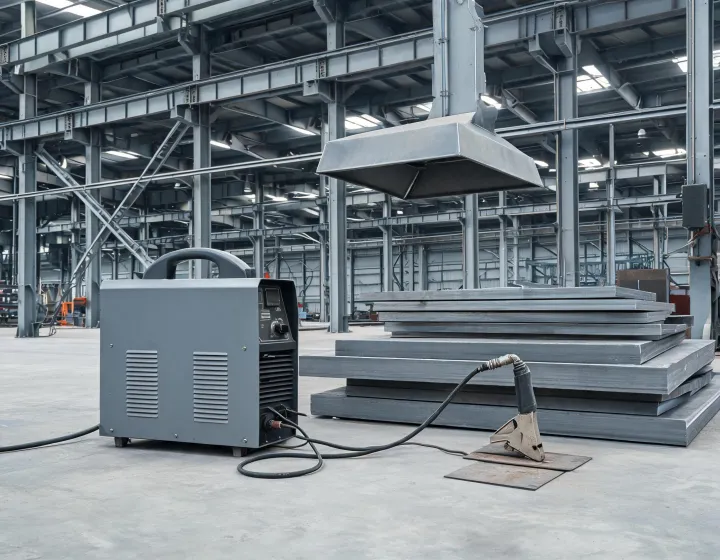
Structural bay with an unlabeled arc welding setup and fume hood
  1. Duty: fabrication, structure, pipe, repair, production, or field
  2. Utilities: volts, phase, gas, extraction
  3. Files: datasheet, drawing, test basis, deviation list
  4. Commercial: quantity, incoterm, US destination

Application and condition matrix

Duty Process question Duty and utilities Interface Documents
Fabrication shop MIG, TIG, or both for 1 mm to 12 mm sheet Indoor ambient temperature and breaker amperes Torch switch or foot pedal Datasheet plus gas note
Structural steel Process for 6 mm to 40 mm plate and fillet size Duty cycle at the planned current Cable length and ground path Test basis and WPS reference you already hold
Pipe spool TIG root or stick fill, diameter range Single-phase or three-phase availability Remote amperage control Drawing revision and purge notes
Repair bay Stick or multi-process for dirty or painted steel Portability and open-circuit voltage question Electrode range in mm Electrode specification to request
Production cell Repeat joints per shift as a buyer target Rated power and cooling method Control interface and fixture I/O Spare parts list and commissioning scope
Field work Engine-drive or inverter, process limits Outdoor ingress protection question Lead length and case weight Noise level and fuel or input notes

Process comparison, not a brand ranking: MIG often suits continuous wire on carbon steel from about 0.8 mm upward when gas is available. TIG suits thinner stainless or aluminum when tungsten and gas control matter, with lower deposition than wire in many shops. Stick suits field or dirty steel when gas logistics are poor, with electrode changes that affect throughput. Those are selection dimensions. They are not measured results for a model you have not named. Footprint, service access, and consumables still change the delivered cost.

Lowest purchase price versus comparable lifecycle scope: a field inverter with a low unit price can win a capital screen and still omit leads, electrodes, and freight. A structural package with a higher unit price can include a feeder and a spare parts list. Rank them only after incoterm and exclusions match. Standard configuration keeps the bill of materials short. Application-specific automation adds a control interface that must be quoted or marked out.

Utilities and compatibility questions

Does a matching voltage label mean the machine can be connected?

No. Input voltage, frequency, phase, and breaker size have to be confirmed for the exact proposed model. A 230 V single-phase nameplate is not a 460 V three-phase install. This desk does not sign off on your panel.

How should duty cycle be requested?

Ask for current in amperes, ambient temperature in °C, and cycle length. Quote IEC 60974-1 when you want that method named. A 60% duty cycle at 300 A and 40 °C is not the same as 60% at 180 A. Headline rating versus that test basis is why two similar brochures can disagree after the files arrive.

What stays unresolved on purpose?

Stock, compatibility with an existing gun, certification, noise level, and lead time. UL or ETL marks, if offered, bind to the supplier file for that model. ISO 9001, if offered, describes a quality system scope you still have to read. A factory acceptance test is a step you can add. It is not a result stored here. No social account or street desk is published.

Worked example: a 2026 pipe contractor lists 40 carbon-steel spools, 2 mm to 10 mm, destination Texas, timing still blank. The process step records TIG for the root and leaves fill process open. The result is a split RFQ, with gas, purge, and duty cycle still blank until suppliers answer. See TIG labels, MIG scope, and the stick checklist.

Request factory quotes for this duty

Send the duty row you used, the quantity, and the destination. Returned offers stay comparable only while those fields stay fixed.